Description
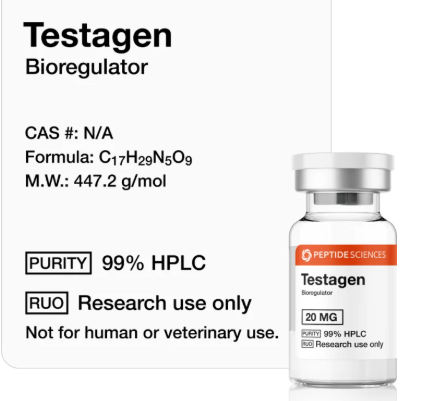
Testagen is a synthetic short peptide investigated in laboratory research as a molecular regulator of gene-expression programs associated with pituitary–thyroid axis signaling in preclinical experimental models. Published studies describe Testagen-associated modulation of transcriptional activity in endocrine tissues under controlled in-vivo and in-vitro conditions, with emphasis on regulatory interactions between pituitary-derived signaling factors and downstream endocrine-responsive gene networks.
Due to its low molecular weight and short amino-acid sequence, Testagen is examined as a research tool for probing peptide–DNA interactions, transcriptional regulation, and epigenetic mechanisms governing endocrine-system signaling in animal and cellular models.
Biochemical Characteristics
Molecular Formula: C17H29N5O9
Molecular Weight: 447.2 g/mol
Source: PubChem
Research Applications
Testagen is utilized as a laboratory reagent in research programs focused on:
• transcriptional regulation within pituitary-derived endocrine signaling pathways,
• peptide-mediated modulation of thyroid-responsive gene-expression networks in animal models,
• investigation of peptide penetration across cellular and nuclear membranes,
• epigenetic regulation of genes involved in endocrine and immune-related differentiation pathways, and
• mechanistic studies of hemostasis-associated gene-expression regulation in preclinical systems.
Pathway / Mechanistic Context
Experimental evidence indicates that short regulatory peptides such as Testagen can penetrate cellular and nuclear membranes and associate with DNA regulatory regions. In preclinical models, this interaction has been linked to altered transcriptional activity of genes governing pituitary signaling and downstream thyroid-responsive pathways.
Within hypophysectomized avian models, Testagen-associated transcriptional modulation has been evaluated in the context of thyroid morphology, endocrine signaling intermediates, and systemic regulatory feedback mechanisms. These findings are interpreted through changes in gene-expression profiles rather than direct physiological outcomes.
Additional mechanistic studies describe peptide-driven regulation of differentiation-associated genes in stem and progenitor cell populations, supporting the use of Testagen as a molecular probe for studying lineage commitment and transcriptional plasticity under experimental conditions.
Preclinical Research Summary
The peer-reviewed literature evaluating Testagen includes:
• avian models examining pituitary–thyroid signaling following experimental peptide exposure,
• cellular studies of peptide–DNA interactions and nuclear localization,
• investigations into transcriptional regulation of differentiation-associated genes, and
• experimental assessments of gene-expression changes related to immune-system lineage development and hemostasis-associated pathways.
All findings remain limited to controlled laboratory systems and established preclinical models.
Form & Analytical Testing
Testagen is supplied as a synthetic peptide reagent intended for laboratory research use. Standard analytical characterization methods for peptide identity and purity may include chromatographic and mass-spectrometric techniques (e.g., HPLC and MS), with documentation provided according to supplier quality systems.

Reviews
There are no reviews yet.